

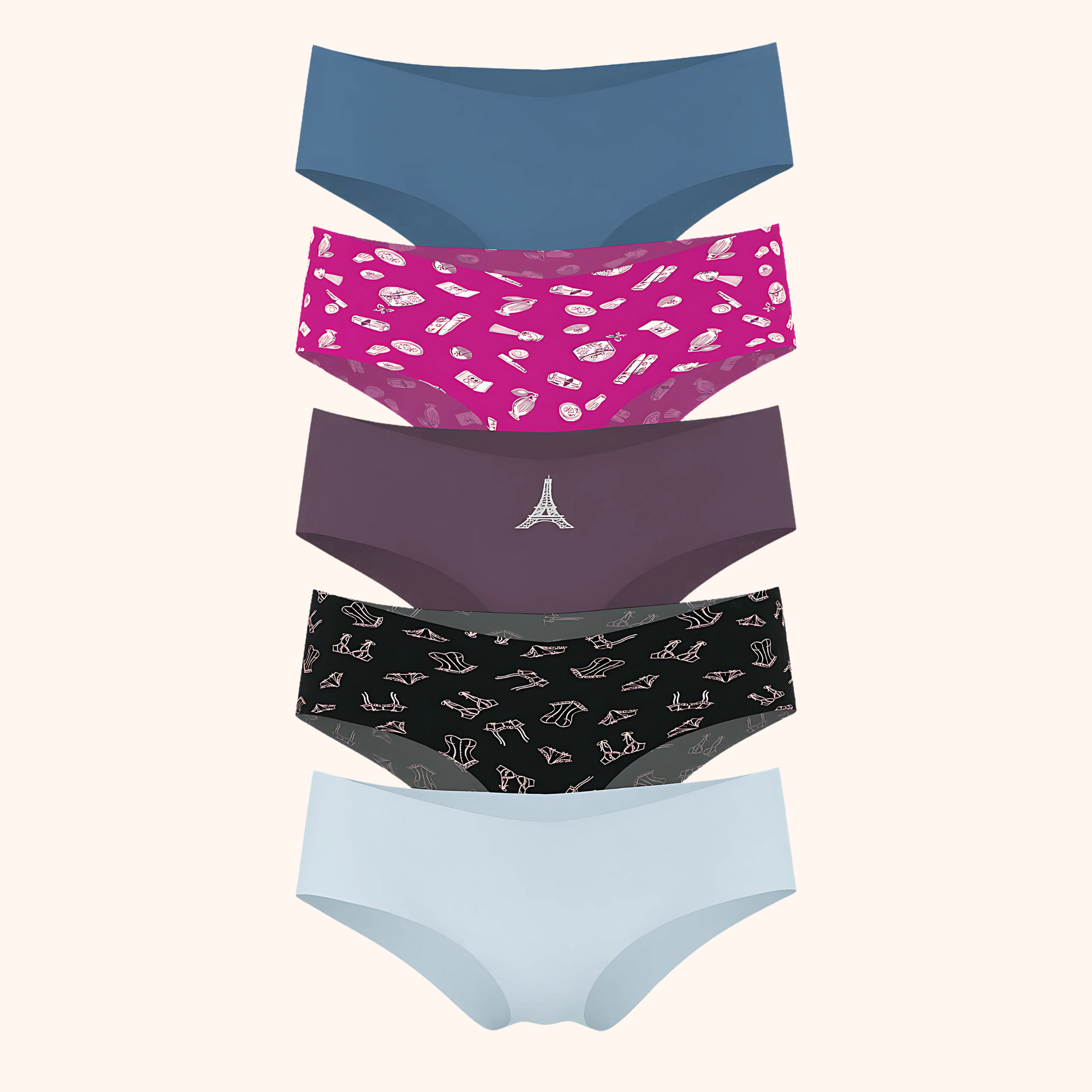
A cotton gusset does not mean the whole pair of underwear is cotton. The gusset is the inset panel at the crotch, and its fiber composition can differ from the main fabric. Read the statements for each section separately instead of treating the most familiar material word as a description of the entire garment.
This distinction helps you compare the clothing you are buying. It does not establish medical suitability or prove that one fabric is best for every wearer.
Find the section name before the percentage
Look for words such as main fabric, body, lining or gusset beside the composition statement. Each label tells you which part the following numbers describe.
For example, a statement that the gusset is 100% cotton applies to that panel. It should not be expanded into a claim that the waistband, front, back and decorative trim are all cotton too.
The Federal Trade Commission's textile-labeling guidance explains how different fiber compositions can be identified by section. For a shopper, the practical habit is to keep the section and its material statement together when comparing items.
Work through one actual example
The current Pack of 5 No Show Cheeky Panties description lists:
| Section described | Composition stated in the listing |
|---|---|
| Main composition | 71% recycled polyamide and 29% elastane |
| Gusset | 100% cotton |
The main-fabric percentages add to 100 for that blend. The separate cotton statement describes another section; you do not add it to the first percentages and conclude that the garment contains 200% fiber.
These numbers are the seller's current listing statements, not independent laboratory measurements. Check the selected item and its garment label when it arrives. If those disagree, ask the seller to resolve the difference rather than deciding which statement to assume.
Compare a second item section by section
The Soft Mesh Thong Underwear Pack of 5 description lists a main blend of 90% polyamide and 10% elastane, alongside a cotton-gusset description. It is therefore a different stated main blend from the cheeky-panty example, even though both mention cotton in the gusset.
Do not fill in an unstated percentage for a lining just because another product supplies one. Likewise, a phrase such as “soft cotton gusset” does not establish the material of the mesh surrounding it.
Compare the actual sections you care about. That produces a clearer choice than putting both items into a broad “cotton underwear” category.
Keep composition separate from feel and care
A fiber list identifies materials; it does not fully describe thickness, knit structure, seam placement or how a garment feels on your body. Two items with similar percentages can still have different constructions and fits.
Follow the care instructions for the complete garment. Do not choose a wash temperature solely from the cotton panel while ignoring elastic, trim or the main fabric.
You also do not need to infer hygiene or health benefits from a composition label. If you have a specific medical concern or sensitivity, use appropriate professional guidance and accurate product information rather than a broad fabric promise.
Save the complete description when comparing
Write down the item, selected option, main blend and separately stated lining details. Keep “not stated” distinct from a material you know is present. That short comparison lets you ask a useful question without guessing.
The next time a listing highlights cotton, check where that cotton is. Keeping the section name attached to its composition is the simplest way to understand what the garment actually claims to contain.